



Message from HOD
In an era defined by rapid technological advancement, shifting economic realities, and constant organizational transformation, the true challenge before future leaders is not merely to acquire knowledge, but to cultivate the ability to think critically, adapt intelligently, and lead responsibly amidst uncertainty.
The philosopher Rene Descartes once observed, "I doubt, therefore I think, therefore I am." This profound statement reminds us that doubt is not a weakness, but the beginning of intellectual inquiry. Similarly, Voltaire's insight - "Uncertainty is an uncomfortable position, but certainty is an absurd one" - holds deep relevance in today's business environment. Organizations that cling to rigid certainty often struggle to innovate, while individuals who remain curious and adaptable continue to evolve. The most effective leaders are not those who claim to possess all the answers, but those who demonstrate the wisdom to learn continuously and the humility to remain open to change.
At St. Francis Institute of Management Studies, we believe that management education extends far beyond textbooks, and examinations. Our academic philosophy is rooted in intellectual engagement, reflective learning, ethical responsibility, and experiential exposure. Through case-based discussions, interdisciplinary learning, industry interaction, research orientation, and collaborative inquiry, we strive to nurture individuals who can think independently and act thoughtfully in complex environments.
We regard uncertainty not as an obstacle to education, but as evidence that learning is taking place. When students begin to question conventional frameworks, confront unfamiliar ideas, and engage critically with ambiguity, they develop the intellectual resilience required for meaningful leadership.
Our mission is therefore not merely to prepare students for careers, placements, or managerial roles, but to shape reflective professionals and responsible leaders capable of navigating an increasingly dynamic world with discernment, integrity, and purpose.
As educators, we remain committed to creating an environment that encourages curiosity, innovation, dialogue, and lifelong learning. For ultimately, the highest purpose of education is not to provide certainty, but to cultivate minds capable of thinking beyond it.
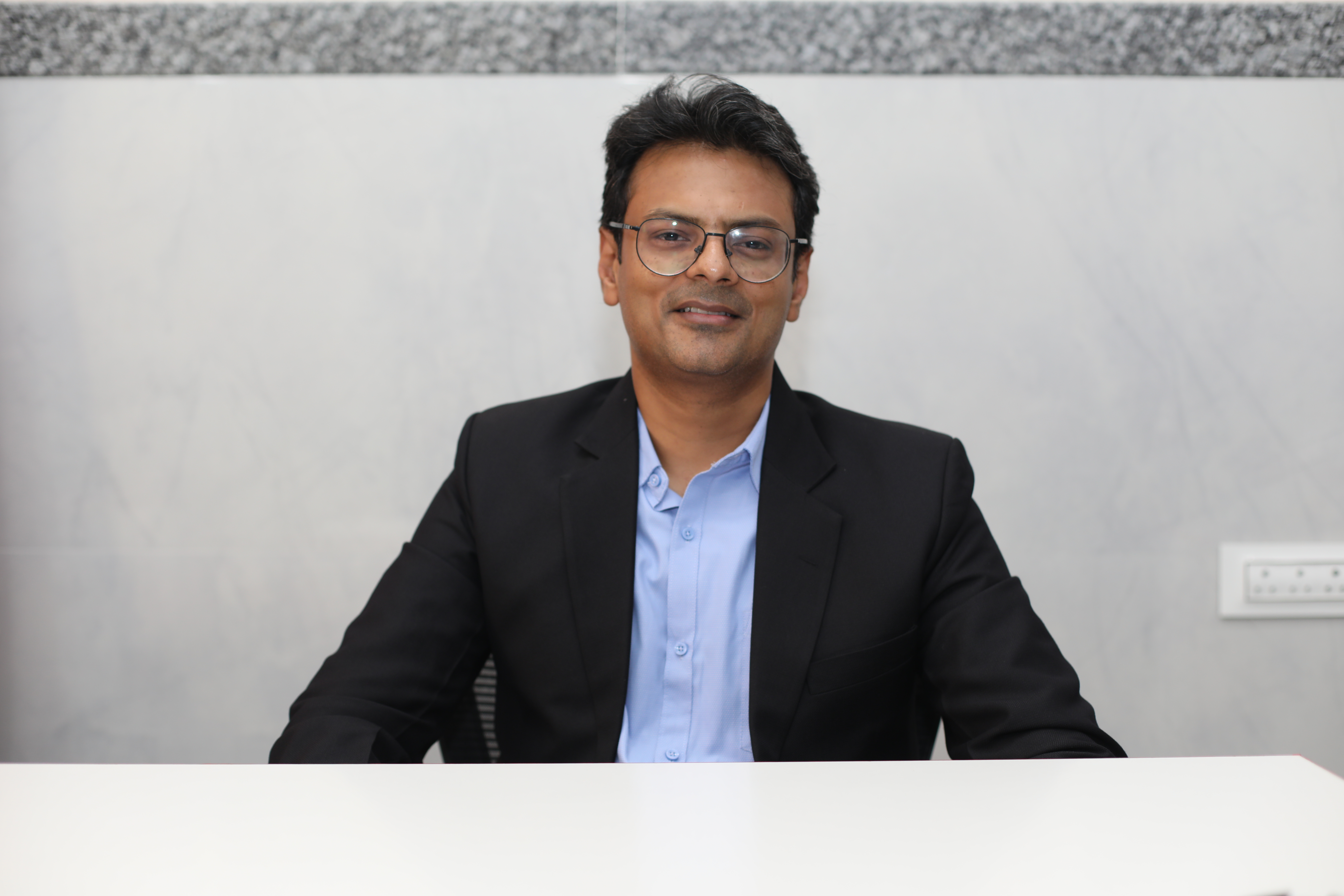
Dr. Aditya Prasad
Head of the Department